AUGUST 25, 2026
The Long Shot
On keeping things in perspective
By Rushil Patel · 4 min read
Last edited AUGUST 25, 2026
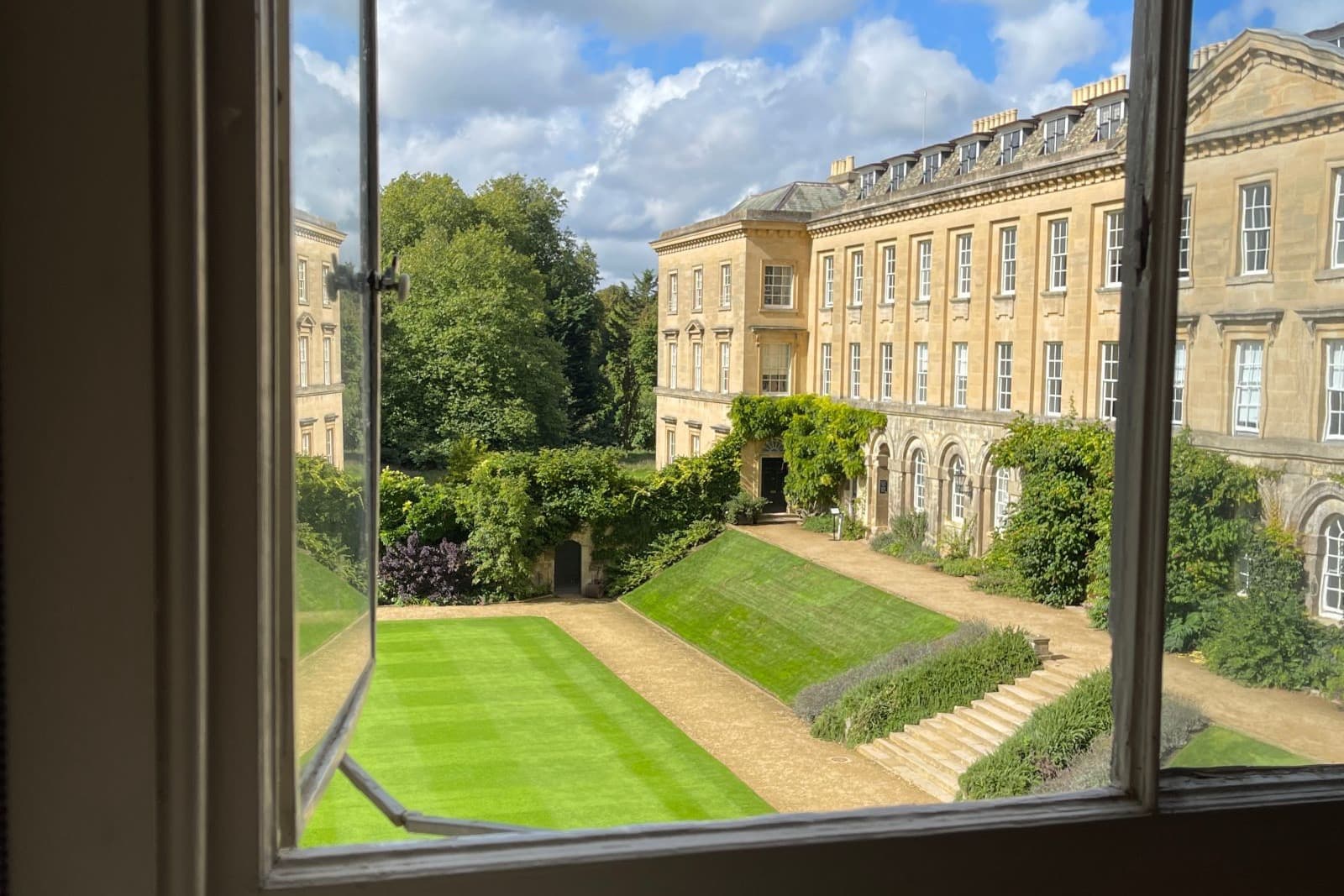
In the fall of 2023 I studied abroad at Oxford. A relationship had ended a few months before, and I arrived still processing it, which is a strange state to bring into a new life. There were new people to meet and a calendar full of things I was supposed to be excited about, and mostly I was. But every so often, without warning, something ordinary would set it off. A song, a walk, a certain kind of evening, and there it was again, the feeling that something was missing, that things could have been more if they had gone differently.
Somewhere in that fall, while scrolling on my phone, which is where wisdom apparently lives now, I came across a line from Charlie Chaplin: life is a tragedy in close-up, but a comedy in long-shot. I liked it right away, because it hands you a perspective you didn’t have a second before.
What he meant, I think, is something I have since noticed about pain, in myself and in most people I know: it does not stay its actual size. Whatever is happening expands to fill the whole frame. A breakup stops being one chapter of a life and becomes the life. A mistake at work stops being a mistake and becomes evidence about who you are. That is what a close-up does. It is honest about detail and dishonest about proportion. There is no context in the shot, so the thing in front of you is, as far as your eyes can tell, everything there is. And we live in the most close-up era there has ever been. Everything about the internet pushes your face closer to the screen of your own life, until every small situation arrives with the production value of a crisis.
But pull the camera back and it is the same life, the same events, except now you can see the years on either side of this moment and the people moving through them. Some stay. Many come and go, and that turns out to be one of the more reliable facts about a life rather than a tragedy specific to yours. The strangest part is that the painful scenes, viewed from back here, are often the interesting ones. The story where everything went smoothly is the story nobody tells at dinner.
Psychologists have a name for this move, self-distancing, and the research mostly confirms what Chaplin compressed into one line. Watching your situation as an observer instead of from behind your own eyes measurably turns the emotional volume down, and imagining how you will feel about something later works largely because it points your attention at the one thing the close-up hides, which is that this is temporary.
Over time, I turned the quote into a technique. When something is sitting heavy on me, I ask myself: if I were looking back at this moment from some point in the future when things are okay for me, would it be funny? Usually the answer is yes. Not hilarious. Funny the way old photos of your haircut are funny. Sometimes I picture a timeline of my life instead and place the moment on it, a small dot on a long line, and I have watched enough dots shrink to trust that this one will too.
None of this replaces actually accepting what happened, and it is not meant for every situation. Some weights are real and need more than perspective. It also does not always work. Some days the camera will not pull back no matter what I do, and that is fine. But as a default posture toward your own life, learning to smile at it is one of the healthier things you can practice.
It has been three years since that fall. From here the picture looks different: a person walking around one of the most beautiful places he will ever study, carrying something that felt permanent and was not. He was fine. He was better than fine, honestly, he just could not see it from where he stood. And yes, from this distance, it is a little funny.